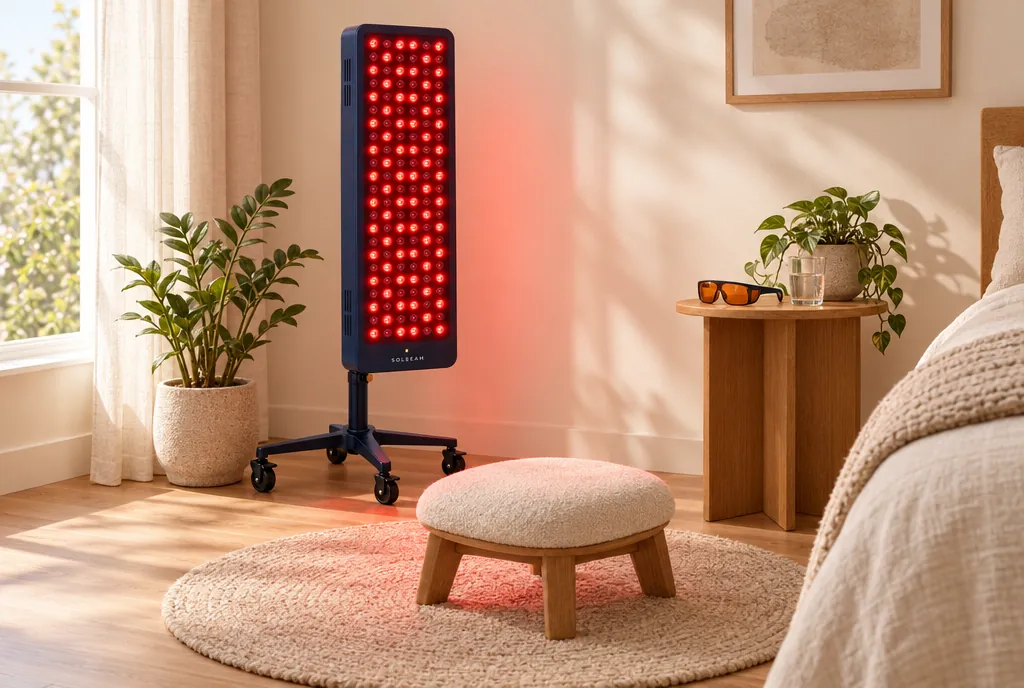
Training · 7 min read
A Pre-Training Warm-Up with Red Light and Mobility
A physical therapist's 20-minute warm-up: a short light session, easy cardio and mobility drills matched to the training you have planned for the day.
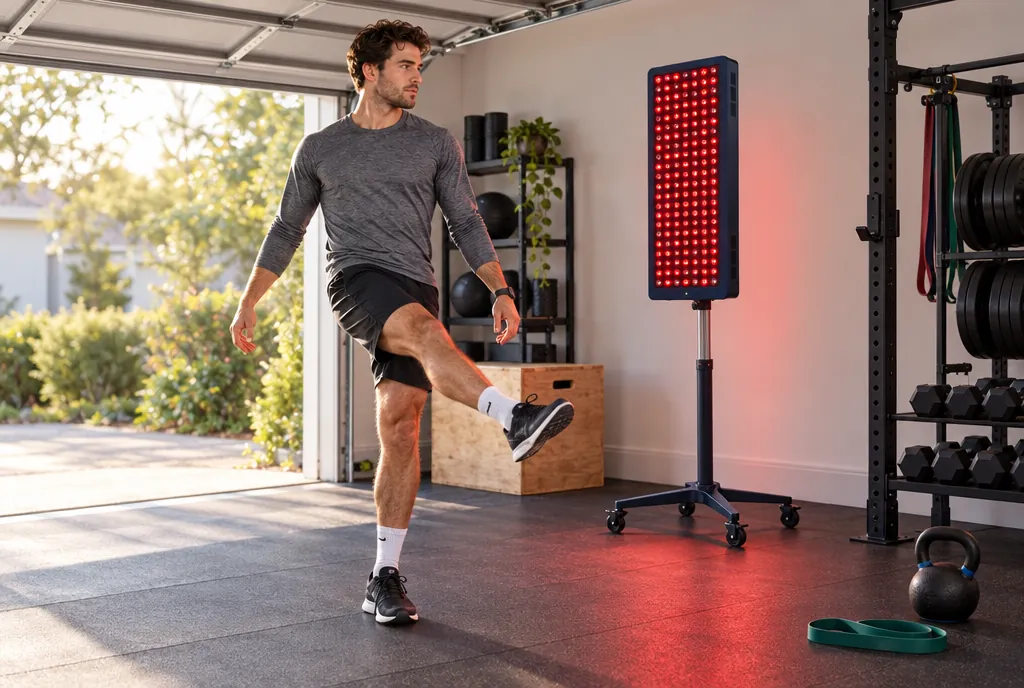
As a physical therapist, I spend a lot of time talking with people about what happens before a workout, not just during it. A good warm-up raises your body temperature, rehearses the movements you are about to do, and gives you a moment to check in with how your body feels that day. Many of our customers have started adding a short red light session to that window, and it fits neatly into a warm-up that already works.
This is the 20-minute routine I suggest for people who train three to five days a week, whether that is lifting, running, court sports or a class at the gym.
Why add light to a warm-up
Red and near-infrared light is something many active people use as part of their preparation and recovery routines. The gentle warmth from a panel feels good on tight areas, and the session gives you a structured few minutes to slow down before you speed up. Think of it as one piece of a larger warm-up, not a replacement for movement. You still need to raise your heart rate and move through your full range before you load anything heavy.
The 20-minute protocol
Here is the structure. Adjust the times to fit your schedule, but keep the order.
- Minutes 0 to 10, light session: Stand 6 to 12 inches from your panel with protective glasses on. Face the panel for 5 minutes, then turn for 5 minutes on your back or the side you plan to work hardest.
- Minutes 10 to 14, general warm-up: Easy cardio such as a brisk walk, rowing or cycling at a conversational pace.
- Minutes 14 to 18, mobility: Three or four movements that match today's session (see below).
- Minutes 18 to 20, ramp-up sets: Lighter versions of your first exercise, building toward working effort.
If you only have 10 minutes, shorten the light session to 5 and keep the movement portions. Movement is the part not to skip.
Erin's tip: do your light session in the clothes you will train in, with the areas you want to focus on uncovered. Light needs a clear path to skin, and changing afterward eats into your warm-up window.
Mobility pairings by training day
Match your mobility to the work ahead. These are the pairings I give most often.
Lower-body days
- Leg swings, front to back and side to side, 10 each leg.
- Deep bodyweight squat hold with gentle shifting, 45 seconds.
- Half-kneeling hip flexor stretch with an overhead reach, 5 slow reps per side.
- Ankle rocks against a wall, 10 per side.
If your knees tend to feel stiff at the start of a session, the Knee Wrap is an easy way to give that area a focused 10 minutes while you sit and do your ankle work.
Upper-body days
- Arm circles, small to large, 10 in each direction.
- Band pull-aparts, 15 reps.
- Thoracic rotations on all fours, 6 per side.
- Wall slides, 10 slow reps.
For desk workers who carry tension in the upper back, the Neck & Shoulder Wrap can run during the general warm-up, so you are not adding time to the routine.
Running and conditioning days
- Walking lunges with a twist, 8 per side.
- Hamstring sweeps, 10 per side.
- Calf raises with a slow lower, 15 reps.
- Short strides at 60 to 70 percent effort, 3 to 4 reps.
Choosing a panel for warm-ups
For a pre-training routine, coverage matters because you are short on time. A larger panel lets you cover the front of your legs and torso in one pass instead of rotating through several smaller positions. The Solbeam 1000 covers the upper or lower body from a standing position, which is why it is popular in garage gyms. If space is tight, a Solbeam 600 on a door mount works well, and you can focus on the areas you plan to train that day.
If you train at a gym and warm up at home first, keep it simple: a 10-minute light session while you put on your shoes and drink some water, then the movement portion when you arrive.
Getting the timing right
A few practical notes from working with active people:
- Keep it close to training. The routine is designed to flow straight into your workout. If you finish the light portion an hour before you train, repeat the general warm-up.
- Do not stack long sessions. If you already use your panel in the evening, keep the pre-training session to 5 to 10 minutes.
- Stay hydrated. A glass of water during the light portion is an easy habit to build.
- Listen to your body. If an area feels unusual during the warm-up, scale back the session and check in with a healthcare professional.
What a week might look like
For someone training four days a week, a balanced plan looks like this:
- Monday, lower body: 10-minute light session with a leg focus, then lower-body mobility.
- Tuesday, upper body: 10-minute light session on the back and shoulders, then upper-body mobility.
- Wednesday: Rest or an easy walk. Optional 15-minute evening session.
- Thursday, conditioning: 5-minute light session, then running mobility and strides.
- Friday: Rest.
- Saturday, full body: 10-minute light session front and back, then a blend of both mobility lists.
- Sunday: Rest or a longer walk.
Use this as a template, not a rulebook. The best warm-up is the one you repeat consistently, and a panel that is already plugged in and waiting makes that a little easier. If you have questions about how a warm-up fits your own training history, a healthcare professional or qualified coach can help you adapt it.
This product is not intended to diagnose, treat, cure, or prevent any disease. This article is for general wellness information; consult a healthcare professional with questions about your own health.