Routines · 7 min read
A Weekly Recovery Routine for Active People
Training gets a plan; recovery often gets leftovers. This weekly routine fits red light sessions, mobility and rest into 15 to 25 minutes on most days.

Most active people have a detailed training plan and a loose recovery plan. Workouts are scheduled; recovery happens if there is time left over. In my years as a physical therapist, the people who kept training happily for years were rarely the ones with the toughest programs. They were the ones who planned their recovery with the same care as their workouts.
This post lays out a simple weekly recovery routine you can adapt to your own schedule. It combines red light sessions, movement, sleep habits and rest days into one plan that takes about 15 to 25 minutes on most days.
The four building blocks
A good weekly routine balances four things. None is complicated on its own; the value comes from doing them regularly.
1. Red light sessions
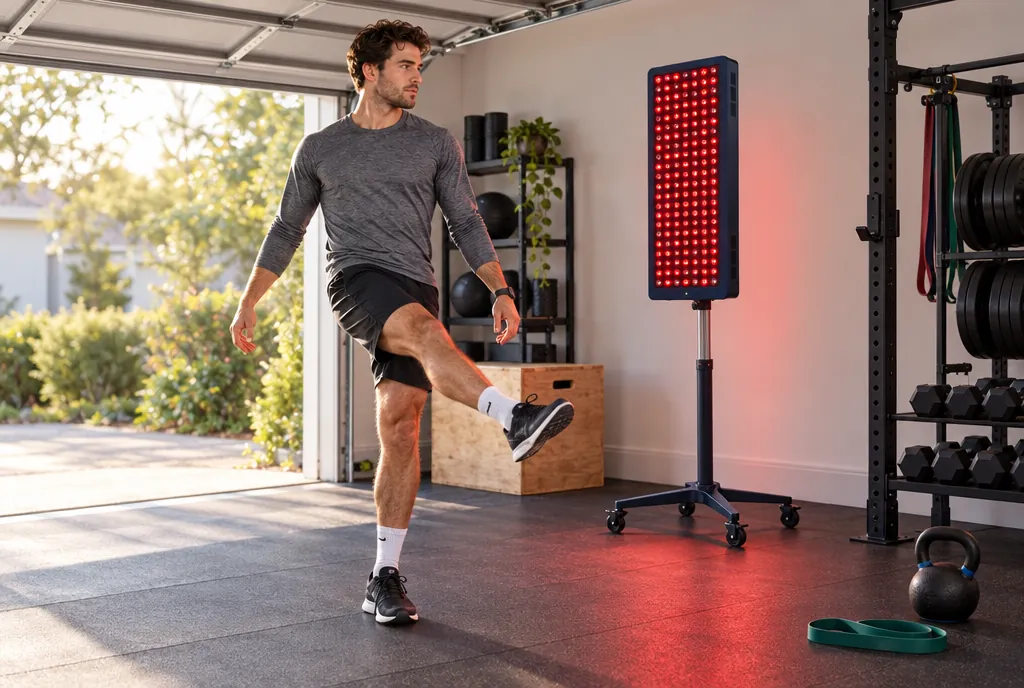
Red and near-infrared light supports muscle recovery as part of a broader routine. Most people use a panel for 10 to 20 minutes per area, 4 to 6 days a week, standing 6 to 12 inches away with protective glasses on. A mid-size panel such as the Solbeam 600 covers the torso or thighs in one pass, which keeps sessions short.
2. Easy movement
Low-intensity movement on lighter days, such as walking, cycling or swimming at an easy pace, keeps you active without adding much to your overall training load.
3. Mobility
Ten minutes of mobility work a few times a week helps you maintain your range of motion and gives you a regular check-in with how your body feels.
4. Rest and sleep
At least one full rest day and a consistent bedtime are the foundation. Everything else in this plan builds on them.
A sample week
This plan assumes four training days. Shift the days to match your own schedule, but keep the pattern of harder days followed by easier ones.
- Monday, training: 10-minute light session after training, focused on the main areas worked. 5 minutes of stretching.
- Tuesday, easy day: 30-minute walk. 15-minute light session, front and back. 10 minutes of mobility.
- Wednesday, training: 10-minute light session after training. A short stretch before bed.
- Thursday, easy day: An easy bike ride or swim. 15-minute light session. 10 minutes of mobility.
- Friday, training: 10-minute light session after training.
- Saturday, long session: 15 to 20 minute light session, split between front and back. Gentle stretching.
- Sunday, rest: No structured training. An optional 10-minute evening light session as part of a wind-down.
Erin's tip: write your light sessions into the same calendar as your workouts. When recovery has a time slot, it stops being the first thing you skip.
Adding targeted wraps
Panels are best for larger areas. For specific spots that see heavy use in your sport, a targeted wrap can be more convenient because you can wear it while sitting, reading or watching a game.
- Runners and court athletes often add the Knee Wrap on long-run or match days.
- Lifters and rowers tend to reach for the Recovery Belt, which wraps the lower back and core.
- Desk workers who train after hours often pair a panel session with the Neck & Shoulder Wrap.
A wrap session can replace a panel session on easy days, or run alongside one on harder days. Keep the total time for any single area within the 10 to 20 minute range.
Adjusting for your training load
Heavier weeks
During a build phase or a race block, lean on consistency rather than longer sessions. Keep light sessions at 10 to 15 minutes, protect your rest day, and add an extra easy-movement day if your schedule allows.
Lighter weeks
On a lighter or travel week, keep the habit alive with shorter sessions. Five to ten minutes with a Solbeam Mini or a wrap in your bag is enough to stay in rhythm until your normal schedule returns.
Coming back after a break
Restart gradually. Begin with 10-minute light sessions three times a week alongside easy movement, and build back toward your usual routine over two to three weeks. If you are returning after time away for a health reason, check in with a healthcare professional first.
Making the routine stick
- Anchor sessions to existing habits. A post-workout shower, morning coffee or the evening news are all reliable cues.
- Keep the setup visible. A panel on a door mount or floor stand gets used far more than one packed away in a drawer.
- Track simply. A check mark on a calendar is enough. Aim for most days, not every day.
- Review monthly. Once a month, ask what felt easy, what you skipped and what to change.
What to expect
Recovery routines build slowly. The biggest difference usually comes not from any single session but from the rhythm of the week: training days feel more focused when easy days are actually easy, and having a set time to slow down makes the whole plan easier to keep. Give a new routine at least four weeks before deciding what to change.
If you are starting from scratch, our bundles pair a panel with the essentials, and our frequently asked questions cover common setup details. Start with three sessions a week, and let the routine grow with you.
This product is not intended to diagnose, treat, cure, or prevent any disease. This article is for general wellness information; consult a healthcare professional with questions about your own health.